Air Fighter Font: High-Octane Typography for Bold Brands
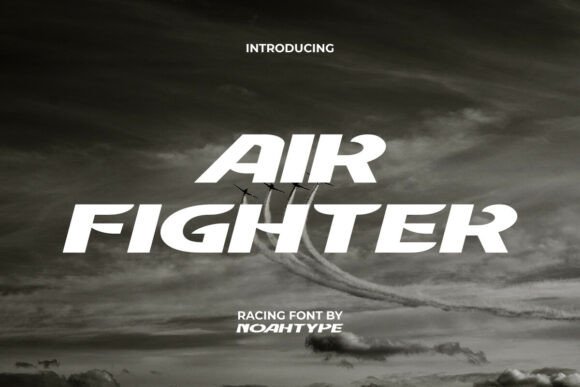
If your project needs to convey speed, precision, and a modern edge, the typography you choose is your first line of attack. Air Fighter is a display font that captures that exact feeling. It’s a sporty, sans-serif typeface whose characters are subtly inspired by the sleek, angular lines of airplane wings. This isn’t just another bold font; it’s a design asset with a built-in narrative of motion and aerodynamics, making it a powerful tool for anyone looking to inject energy into their visual communication.
More Than a Font: A Visual Identity Catalyst
The unique character of Air Fighter lies in its details. The letterforms feel engineered, with clean cuts and dynamic angles that suggest forward momentum. This makes it an exceptionally versatile premium font for projects where you need to make an immediate, impactful statement. It functions brilliantly as a display font, drawing the eye in headlines, logos, and hero sections where a standard sans serif font might fall flat. Its inherent style lends itself perfectly to a specific brand identity—one that is active, contemporary, and confident.
Think about the last time a logo design stopped you in your tracks. Often, it’s because the typography did the heavy lifting. Air Fighter can serve as the cornerstone of a brand identity for a fitness studio, a tech startup, an outdoor apparel line, or a motorsport brand. Its aesthetic aligns with industries that thrive on performance and innovation: sports, fashion, game design, advertising, and travel. When used on packaging, it can transform a product on the shelf from something passive into something that feels active and engaging.
Practical Applications Across the Design Spectrum
The real value of a creative font like this is measured in its application. Let’s move beyond theory and look at where Air Fighter can genuinely elevate your work.
For packaging design, imagine this font on a box for high-performance headphones, energy drinks, or athletic gear. It instantly communicates the product’s purpose without a single word of copy. On posters for a music festival, a car show, or a marathon, it sets the tone immediately, promising an event filled with excitement and energy. In editorial design, it can be used for pull quotes or feature headlines in a magazine spread about aviation, technology, or extreme sports, adding a layer of thematic consistency to the layout.
In the digital realm, its impact is just as strong. For social media graphics, a bold headline set in Air Fighter can stop the endless scroll, making your post stand out in a crowded feed. On a website, it’s ideal for section headers or call-to-action buttons, guiding the user’s eye and reinforcing the site’s overall vibe. Even for digital products like e-book covers or online course branding, it provides a professional and thematic polish that builds perceived value.
Don’t overlook the world of merchandise and print. Air Fighter is a natural fit for logo design on t-shirts, caps, and tote bags. Its clarity and strong presence ensure it remains legible and impactful even at smaller sizes on a label or as part of a complex invitation design for a launch party or corporate event.
Integrating Air Fighter into Your Design Workflow
Adopting a new typeface into your toolkit requires a bit of strategy. Here’s how to think about using Air Fighter effectively to enhance visual consistency and professional presentation.
1. Define Its Role. First, decide what job this font will do. Is it your primary headline font? Your accent font for call-outs? Because it’s a display font, it’s rarely suited for long paragraphs of body text. Its strength is in short, high-impact bursts. Pair it with a more neutral, highly readable serif font or a clean sans serif font for body copy. A classic combination might be Air Fighter for headlines with a font like Roboto or Open Sans for supporting text.
2. Test for Readability. Always test your typography in context. How does Air Fighter look on a dark background versus a light one? Does it remain legible when overlaid on a busy photograph? Check its performance at the sizes you’ll actually use—on a mobile screen, on a printed poster, on a merchandise tag. Good design is functional design.
3. Leverage Its Styles. Most quality commercial fonts come with multiple weights or styles. Explore what’s included with Air Fighter. A lighter weight might work for subheadings, while a bold or black version is perfect for main titles. Having these options allows you to create hierarchy and depth within your designs while maintaining a unified look.
4. Mind the Licensing. If you’re using Air Fighter for a client project, merchandise for sale, or a marketing campaign, ensure you have the correct commercial license. Using a font outside its license can lead to legal issues. Reputable font marketplaces make this clear, so always review the terms before finalizing a project.
Ultimately, typography is a silent ambassador for your message. Air Fighter offers a distinct voice that is both modern and energetic. It’s a tool for designers, entrepreneurs, and creators who want their projects to feel fast, focused, and forward-thinking. By applying it thoughtfully to the right projects—from branding to web design—you can harness its unique character to create more engaging and memorable visual experiences.