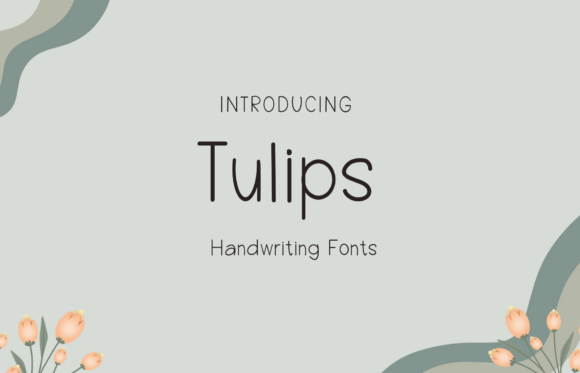
Tulips Font: Your Secret Weapon for Charming, Approachable Design
There's a moment in every creative project where you need a typeface that doesn't just convey information, but also carries a specific feeling—something warm, personal, and immediately engaging. This is where a handwritten display font like Tulips truly shines. It's not just another script; it's a visual personality that can transform a flat design into something that feels crafted, friendly, and full of life. Whether you're building a brand from scratch, designing a wedding invitation, or creating social media graphics that need to stop the scroll, the right choice in typography is your first and most powerful tool.
More Than Just Pretty Letters: The Personality of Tulips
At its core, Tulips is a sweet and friendly handwritten display font. This means it's designed to mimic the natural, imperfect flow of handwriting, but with enough clarity and consistency to be used in professional and commercial contexts. The "sweet" aspect comes from its soft curves and gentle, approachable letterforms. There's no harshness here; it feels like a note from a friend or a doodle in a beloved sketchbook. The "friendly" quality is built into its legibility. Unlike some overly stylized scripts that sacrifice readability for flair, Tulips maintains a clear structure, making it surprisingly versatile for short blocks of text, headlines, and callouts.
This typeface falls squarely into the realm of modern typography that prioritizes emotional connection. It bridges the gap between the casual, human touch of a script font and the functional needs of a creative font for digital and print applications. The visual characteristics—a balanced mix of loops, swashes, and baseline consistency—give it a playful yet polished feel. It's this duality that makes it a valuable design asset for such a wide array of projects.
Where Tulips Blooms: Practical Applications Across Industries
The true test of any premium font is its real-world utility. Tulips excels in scenarios where you want to inject personality and approachability. Think beyond the obvious. While it's perfect for a cute bakery logo or a child's birthday party invitation, its applications are surprisingly broad.
- Branding & Logo Design: For small businesses, especially those in lifestyle, wellness, food, or creative services, a logo sets the tone. Tulips can form the core of a brand identity that feels personal and trustworthy. Imagine it used for a boutique florist, a freelance photographer's watermark, or the logo for a local yoga studio. It immediately communicates care and creativity.
- Packaging & Labels: In a crowded marketplace, packaging design needs to tell a story quickly. Tulips can highlight product names, taglines, or special features on artisanal goods, cosmetics, or gourmet snacks, making the product feel handcrafted and special.
- Invitations & Cards: This is its natural habitat. Wedding invitations, baby shower cards, thank-you notes, and holiday greetings all benefit from the warm, celebratory tone of a handwritten font. It sets an emotional expectation before the recipient even reads the words.
- Digital Presence: For websites and blogs, Tulips works beautifully for section headings, pull quotes, and featured article titles. It breaks up the monotony of standard body text (often a sans serif or serif font) and draws the reader's eye to key points. On social media graphics, it's a powerhouse—ideal for Instagram stories, Pinterest pins, and Facebook ads where a personal touch increases engagement.
- Merchandise & Printables: Think about love shirt designs, motivational posters, or downloadable planners. Tulips adds that sought-after, inspirational feel that resonates with audiences looking for positivity and connection.
- Editorial & Educational Use: For teachers creating classroom materials or students designing presentations, Tulips brings a fun, approachable vibe that can make learning materials more engaging without being childish. It's also great for chapter titles in indie-published books or magazine layouts.
Integrating Tulips into Your Design Workflow
Adopting a new font is about more than just installation; it's about strategy. To get the most out of Tulips, consider these practical tips for implementation.
Match Font to Goal: First, define your project's objective. Is it to feel whimsical, trustworthy, energetic, or elegant? Tulips leans toward whimsical and trustworthy. If your brand is ultra-corporate or tech-focused, it might not be the primary choice, but it could still work for a specific campaign or internal document to soften the tone.
Master the Font Pairing: This is crucial. A display font like Tulips should rarely be used for long paragraphs. Its strength is in headlines, logos, and short bursts of text. Pair it with a clean, highly readable font for body copy. A classic sans serif like Lato, Open Sans, or Montserrat creates a beautiful contrast, letting Tulips' personality shine without overwhelming the viewer. A simple serif font like Georgia or Lora can also work for a more traditional, yet still friendly, combination.
Test for Readability: Always test your chosen typeface at the size and in the context it will be used. What looks charming on a large poster might become illegible as a tiny website button. Check how Tulips renders on different screens and in print. Pay attention to letter spacing and line height adjustments to ensure clarity.
Explore the Included Styles: Many premium fonts come with multiple weights or styles (e.g., regular, bold, italic). Tulips may include stylistic alternates or ligatures—special character variations that can be activated in design software like Adobe Illustrator or Photoshop. These features allow you to customize the look further, avoiding repetition in headlines and adding unique flourishes.
Understand Commercial Licensing: This is a non-negotiable step for any professional project. If you plan to use Tulips for client work, merchandise for sale, or any commercial enterprise, you must ensure you have the appropriate license. Most font licenses are straightforward, but they dictate how many computers can install the font and whether it can be embedded in digital products like PDFs or websites. Always review the license agreement provided by the font creator to avoid legal issues down the line.
The Bigger Picture: Typography as a Communication Tool
Choosing a typeface like Tulips is ultimately a decision about communication. It's a way to whisper your brand's values before a single word is read. In a digital landscape saturated with sterile, impersonal content, a touch of humanity in your typography can be a significant differentiator. It can improve brand recognition by creating a consistent, memorable visual signature. It can enhance audience engagement by making your content feel more relatable and less corporate.
Remember, the goal is never to use a trendy font for its own sake, but to select a typeface that serves your message and connects with your specific audience. Tulips offers a wonderful solution for projects that need to feel approachable, creative, and genuinely warm. By understanding its personality, testing its limits, and pairing it wisely, you can leverage this handwritten display font to create designs that don't just look good, but feel right.